

 Background
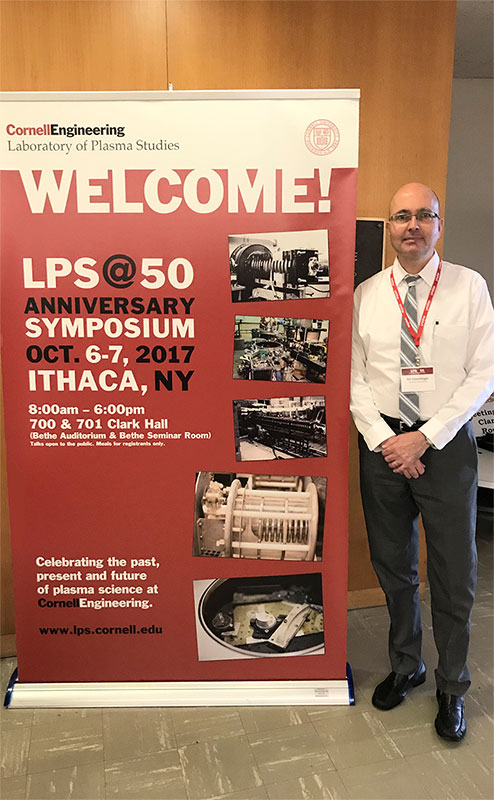
Professor Schamiloglu, born in The BronXXVII, NY, was educated in the New York City public school system, graduating from the Bronx High School of Science in 1976. He received the B.S. and M.S. degrees from Columbia University in 1979 and 1981, respectively. He received his Ph.D. degree in Engineering from Cornell University in 1988. He is a Distinguished Professor in the Electrical and Computer Engineering Department at the University of New Mexico, Albuquerque, NM, USA. He is the Director of the Pulsed Power, Beams, and Microwaves Laboratory. He is the Founding Director of DEC@UNM, UNM's Directed Energy Center. He is President of the SUMMA Foundation. He was the General Chair of the IEEE Pulsed Power and Plasma Science 2007 Conference. He was the General Chair of AMEREM 2014 held at the University of New Mexico in 2014 and he is Chair of ICOPS 2023 Conference in Santa Fe, NM.
Bio
His Wikipedia page can be found here. He is a Fellow of the IEEE, a Fellow of the American Physical Society, and a member of the IEEE Nuclear and Plasma Science Society’s AdCom.
Research Interests
- high energy density science
- pulsed power science and technologies
- plasma physics and diagnostics
- physics and technology of charged particle beam generation and propagation
- high power microwave sources and effects
- neurosystems engineering
Books
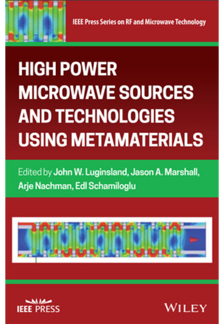
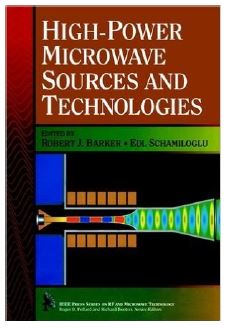
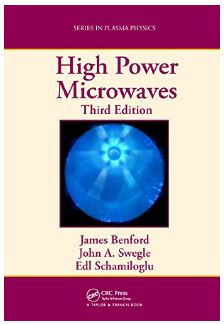
Sponsored Research
 |
 |
FY2020 AFOSR MURI on Exploration of Fundamental Limits to High Power Electromagnetic (HPEM) Amplification | |
Increasing Pulse Length and Repetition Rate of Magnetrons and MILO |
 |
Optimized High Power Microwave Sources |
 |
Ultra-High-Efficiency Relativistic Magnetron and Improved MILO Capabilities |
|
UC Irvine - Multi-Stream Traveling Wave Tube |
|
FY18 Michigan State MURI – Multipactor and Breakdown Susceptibility in Microwave Frequency High Field Devices |
 |
Cornell University Center of Excellence on Pulsed Power Driven High Energy Density Science |
 |
LANL Accelerator Pipeline Program |
 |
DARPA INVEST - Innovative Approaches to High Frequency VEDs |
 |
AFOSR/AFRL Center of Excellence on the Science of Electronics in Extreme Electromagnetic Environments |
 |
FY12 MURI - Innovative use of Metamaterials in Confining, Controlling, and Radiating Intense Microwave Pulses |
Teaching
“Every so often, it still happens that someone tells me that there is an irreconcilable conflict between teaching and research, that dedicated teachers do not do research because it takes away time that they could be spending on their teaching, or that serious research physicists cannot afford to devote significant amounts of time and effort to teaching. As a generalization, this has always struck me as ludicrous.” Robert H. Romer, Editor, American Journal of Physics, from “Teaching or research, research or teaching? - Thoughts about Edward M. Purcell,” Am. J. Phys. vol. 65, 689 (1997).
He teaches undergraduate and graduate level electrodynamics, graduate level antennas and wave propagation, graduate level plasma diagnostic theory and experiment, physics of intense pulsed electron and ion beams, pulsed power and charged particle acceleration, beam-wave interaction in quasi-periodic structures, probabilistic methods, circuit analysis, and engineering ethics.
Media/Press
Schamiloglu selected as Editor-in-Chief for IEEE Transactions on Plasma Science
Schamiloglu participates in academic research security panel at Stanford
UNM's AFRL-Sponsored Directed Energy Center
Schamiloglu on HC-Insider Podcast Discussing Geomagnetic Storms
Air Force to Build New Center to Study and Enhance Directed Energy Capabilities
AFRL Partners with UNM for New Directed Energy Center
Scientists suggest US embassies were hit with high-power microwaves – here's how the weapons work
Schamiloglu elected Fellow of the American Physical Society
UNM and Sandia National Labs sign strategic alliance agreement
UNM engineering school making PPE for health care workers
UNM professor heads team winning $7.5M grant
School of Engineering leaps into making masks
Schamiloglu leads team to win MURI award for research
Schamiloglu receives inaugural IEEE Kristiansen Award
• Announcement of Award
• Acceptance of Award
Sandia Labs and UNM Sign Collaborative National Security Agreement
General Atomics Donates to Professor Schamiloglu's Laboratory
Schamiloglu appointed Special Assistant to the Provost for Laboratory Relations
Schamiloglu on UNM’s Global and National Security Policy Institute
Senator Heinrich tours Schamiloglu’s directed energy laboratory
Schamiloglu Appointed ADR of SOE
Schamiloglu interviewed by EnergyWire on North Korea EMP threat
Schamiloglu comments on MIT metamaterial high power microwave source results
Rear Admiral Phillip G. Sawyer visits The University of New Mexico
Schamiloglu awarded more than $1.4 million in Department of Defense instrumentation grants
UNM Microwave research intensifies
Professor acknowledged with esteemed award
Schamiloglu honored with IEEE pulsed power award
University of New Mexico - Sandia National Laboratories Partnership
UNM leads $6 million grant to study electronics in extreme electromagnetic environments
Professor Schamiloglu Presents Lectures as Visiting Scholar in China
Professor Schamiloglu presents AFOSR 60th Anniversary Lecture
UNM School of Engineering Innovative Research, Fall 2008
Defense Tech Briefs article on the MiPRI program, February 1, 2007
Virginia-Pilot interview regarding Professor Laroussi's "Plasma Pen," October 15, 2005
Popular Science interview regarding the vehicle stopper, May 2005
AFOSR Research Highlights, Jan Feb Mar 2004
Daily Lobo article describing Prof. Schamiloglu's HPM program, February 11, 2004
Albuquerque Journal, January 5, 2004
IEEE Spectrum, cover story, November 2003
Prof. Schamiloglu awarded a 2003 City of Albuquerque "Good Will Ambassador" Award
Washington Post interview, March 19, 2003
New York Times interview, February 20, 2003
Interview with KOB-TV, Albuquerque, NM, January 29, 2003
Article on Tatars published in the Santa Fe New Mexican, February 22, 2002
Other Stuff
"The researches of Brahe, Kepler, Newton, and their successors have presented us with a cold view of the world. As far as we have been able to discover the laws of nature, they are impersonal, with no hint of a divine plan or any special status for human beings. In one way or another ... [we need to be] facing up to these discoveries. They express a viewpoint that is rationalist, reductionist, realist, and devoutly secular. Facing up is, after all, the posture opposite to that of prayer." Steven Weinberg, Facing Up: Science and its Cultural Adversaries (Harvard University Press, Cambridge, MA, 2001), p. ix-x.
Here you can find information on Tatars and Turkiye, or go ask my brother!